Perfumer's Choice #1 - Chanel Nº5
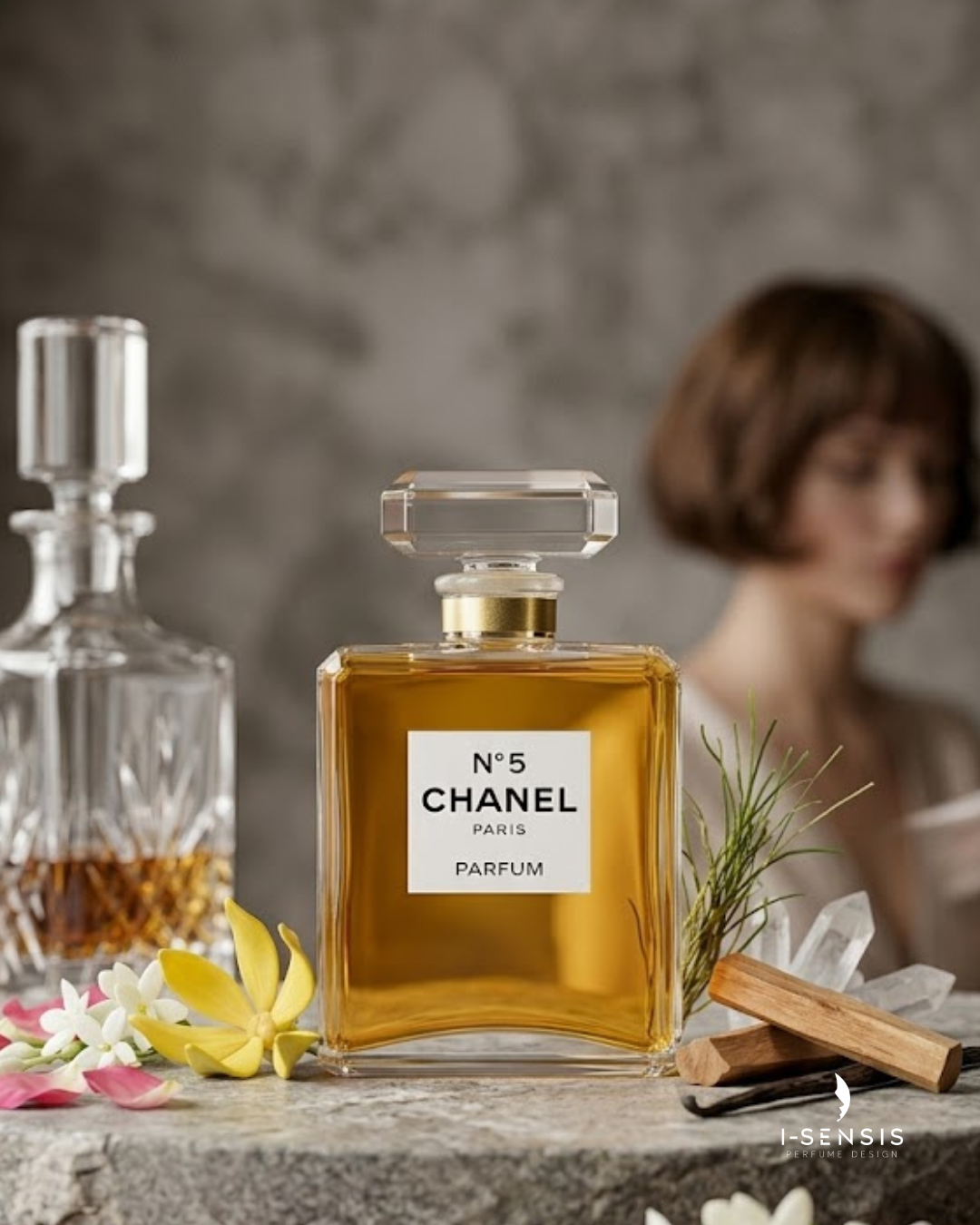
Some fragrances keep up with their time. Others transcend it.
Chanel Nº5 belongs, undoubtedly, to the second category. A creation that not only made a mark in the history of perfumery, but also redefined the concept of perfume itself.
Created in 1921 by Ernest Beaux, at the request of Gabrielle "Coco" Chanel, Chanel Nº5 was born out of an unconventional idea for the time: not set to replicate the scent of a flower, but to create an identity. A perfume not meant to evoke a specific scent, but an idea: the very essence of a woman.
A revolutionary composition (and a masterful "accident")
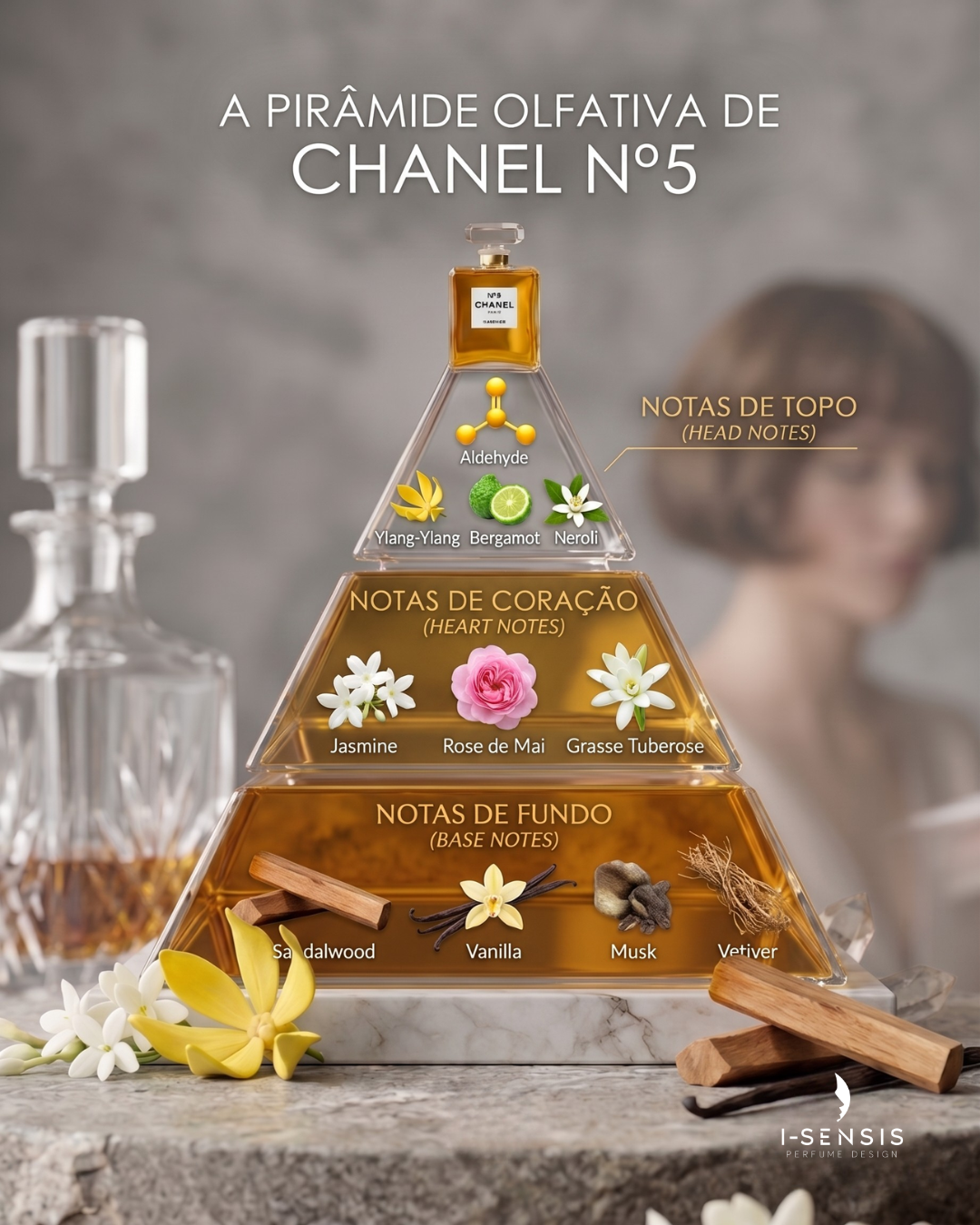
Its signature begins in an unexpected way. The secret to its modernity resides in its innovative use of aldehydes: synthetic ingredients that act as aroma intensifiers, imparting a "clean", "fresh", or "metallic" note that evokes luxury soap or freshly laundered clothes.
Interestingly, this landmark of perfumery was the result of a laboratory "mishap": Ernest Beaux's assistant made a mistake in the formula for Nº5's sample, using ten times more aldehydes than expected. This unintentional overdosage proved to be genius, creating a luminous, and almost abstract opening, enveloped by citrus and floral notes such as bergamot, lemon and ylang-ylang.
At its heart, it reveals itself as classic and elegant: May rose and Grasse jasmine trace a timeless femininity, enriched by soft nuances of iris and lily of the valley.
At its base, it gains depth and permanence: sandalwood,vetiver, vanilla, amber and patchouli create a warm, sophisticated, and unmistakable trail.
More than just a perfume
Chanel Nº5 is often described as the first abstract perfume; it doesn't represent a flower, but a sensation. A clean, enveloping aura, one that's almost impossible to describe in words.
Its minimalist, clean, and elegant bottle contrasted against the ornate patterns of the time, with it becoming just as iconic as the fragrance itself.
Small details, great legacy
The name "Nº5" wasn't just a technical choice. Although it was, in fact, the fifth sample presented by Beaux, Coco Chanel attached a mystical importance to the number 5. Known for her superstition, the designer used to launch her collections on the fifth day of the fifth month; choosing the fifth essence was, therefore, a gesture of luck and destiny.
Its formula incorporates more than 80 ingredients, having become eternal when Marilyn Monroe revealed, in a 1952 interview, that she used just a few drops of Chanel Nº5 to sleep. A simple statement that immortalized the perfume as a symbol of sensuality and intimacy.
Time passes. Chanel Nº5 remains.
Perfumer's Choice: Stories that time transforms into icons

Contact Us
+351 223 260 659
contacto@i-sensis.com